The Best Fluffy Pancakes recipe you will fall in love with. Full of tips and tricks to help you make the best pancakes.
Introduction
There’s something magical about the combination of smoky, spice-crusted fish and sweet tropical fruit. It instantly transports you to a seaside patio where the sun is setting, the breeze is warm, and dinner feels like a celebration of summer itself.
This Blackened Mahi Mahi with Fresh Mango Salsa delivers exactly that experience. The fish develops a beautifully seasoned crust packed with smoky spices, while the mango salsa brings a refreshing burst of sweetness, citrus, and crunch. Every bite balances bold heat with bright freshness.
What makes this recipe especially appealing is how quickly it comes together. Despite its restaurant-quality appearance and flavor, it can be prepared in less than 30 minutes. Whether you’re planning a healthy weeknight dinner, a backyard gathering, or a special summer meal, this tropical seafood recipe consistently impresses.
The contrast between the flaky fish, juicy mango, zesty lime, and aromatic cilantro creates layers of texture and flavor that keep every bite interesting. Best of all, the ingredients are simple, fresh, and easy to find.
Let’s dive into one of the most delicious summer fish recipes you’ll make all season.
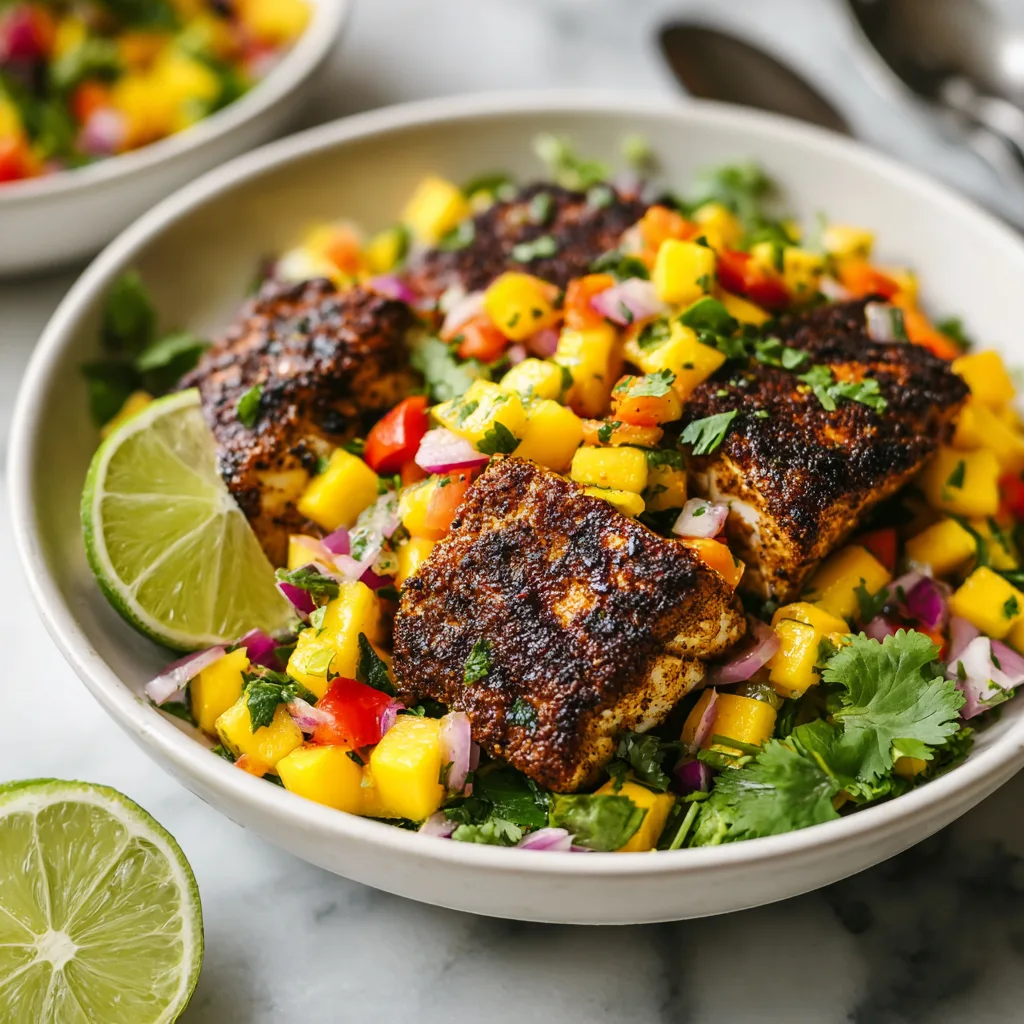
Why You’ll Love This Recipe
- Ready in under 30 minutes
- Packed with fresh summer flavors
- High in protein and naturally gluten-free
- Perfect for healthy weeknight dinners
- Restaurant-quality presentation with minimal effort
- Sweet, spicy, smoky, and citrusy flavors in every bite
- Great for entertaining guests
- Easy to customize with different fruits and spice levels
- Uses simple, fresh ingredients
- Beautifully colorful and Pinterest-worthy
Ingredients
For the Blackened Mahi Mahi
- 4 mahi mahi fillets (about 6 ounces each)
- 1 tablespoon olive oil
- 2 teaspoons paprika
- 1 teaspoon smoked paprika
- 1 teaspoon garlic powder
- 1 teaspoon onion powder
- ½ teaspoon dried oregano
- ½ teaspoon salt
- ½ teaspoon black pepper
- ¼ teaspoon cayenne pepper (adjust to taste)
- ¼ teaspoon ground cumin
For the Fresh Mango Salsa
- 2 ripe mangoes, diced
- ¼ cup red onion, finely diced
- 1 jalapeño, seeded and minced
- ¼ cup fresh cilantro, chopped
- Juice of 1 lime
- ¼ teaspoon salt
Optional Garnishes
- Lime wedges
- Extra cilantro
- Sliced avocado
- Thinly sliced radishes
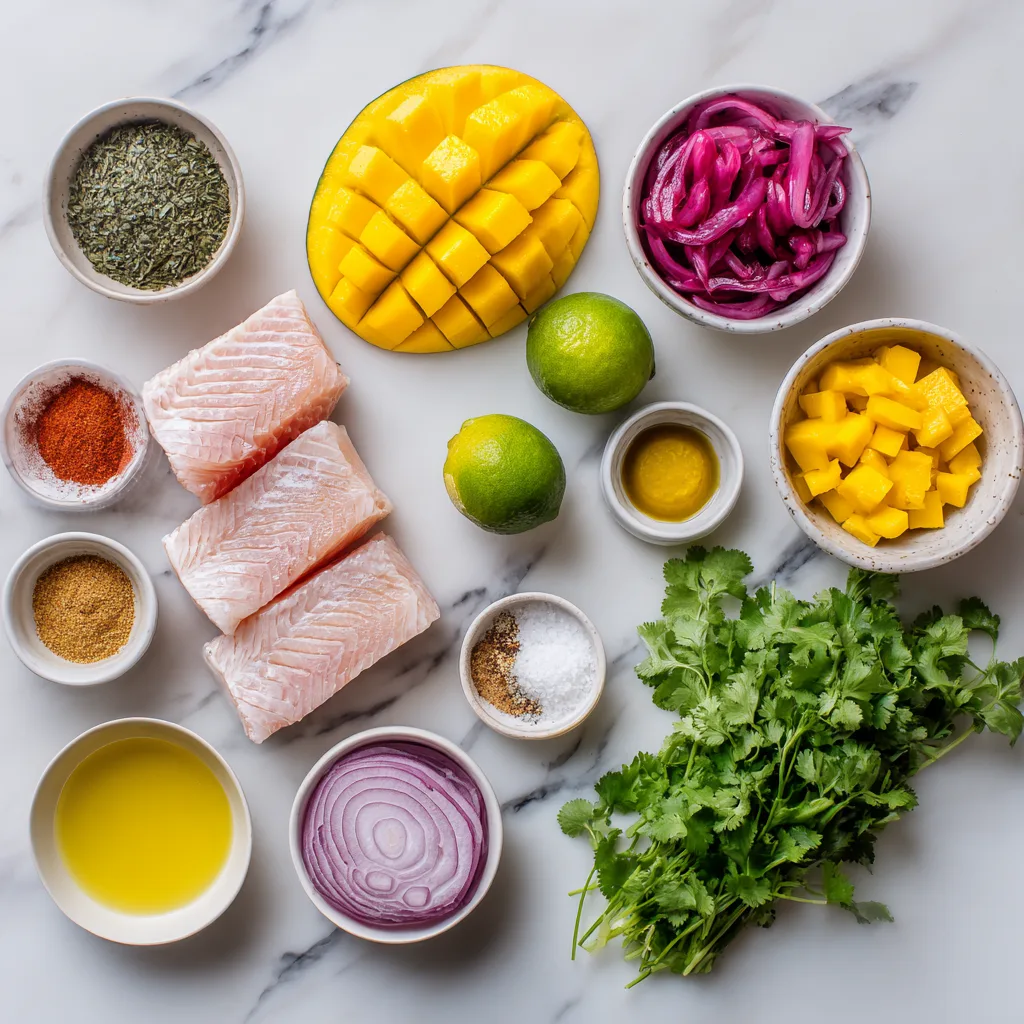
Instructions
Step 1: Prepare the Mango Salsa
In a medium bowl, combine diced mangoes, red onion, jalapeño, cilantro, lime juice, and salt.
Gently toss until evenly mixed. Refrigerate while preparing the fish. Allowing the salsa to rest helps the flavors meld together beautifully.
Step 2: Mix the Blackening Seasoning
In a small bowl, combine paprika, smoked paprika, garlic powder, onion powder, oregano, salt, black pepper, cayenne pepper, and cumin.
Stir thoroughly to distribute the spices evenly.
Step 3: Prepare the Fish
Pat the mahi mahi fillets completely dry using paper towels.
Brush each fillet lightly with olive oil.
Generously coat all sides of the fish with the blackening seasoning mixture, pressing gently so the spices adhere well.
Step 4: Heat the Skillet
Place a large cast-iron skillet over medium-high heat.
Allow the skillet to become very hot before adding the fish. This high heat helps create the signature blackened crust.
Step 5: Cook the Mahi Mahi
Carefully place the seasoned fillets into the hot skillet.
Cook for approximately 4–5 minutes per side, depending on thickness.
The fish should develop a dark, flavorful crust while remaining moist and flaky inside.
The internal temperature should reach 145°F (63°C).
Step 6: Rest Briefly
Transfer the cooked fish to a serving plate and allow it to rest for 2 minutes.
This helps retain moisture and improves texture.
Step 7: Assemble and Serve
Place each mahi mahi fillet onto serving plates.
Top generously with fresh mango salsa.
Garnish with lime wedges, extra cilantro, and avocado slices if desired.
Serve immediately.
Pro Tips
Use Perfectly Ripe Mangoes
Choose mangoes that yield slightly when pressed. Overripe mangoes become mushy, while underripe mangoes lack sweetness.
Pat the Fish Dry
Moisture prevents proper blackening. Dry fish develops a much better crust.
Preheat the Skillet Thoroughly
A properly heated skillet creates that signature restaurant-style blackened exterior.
Avoid Overcooking
Mahi mahi is lean and can dry out quickly. Remove it as soon as it flakes easily with a fork.
Fresh Lime Makes a Difference
Bottled lime juice simply cannot match the brightness and aroma of freshly squeezed lime.
Variations
Pineapple Salsa Version
Replace half of the mango with fresh pineapple for a sweeter tropical flavor profile.
Grilled Mahi Mahi
Cook the fish on a hot grill instead of a skillet. The smoky char complements the salsa beautifully.
Coconut Rice Bowl
Serve over coconut rice with black beans and avocado for a complete tropical-inspired meal.
Extra Spicy Caribbean Style
Add habanero pepper to the salsa and increase the cayenne in the seasoning blend.
Baja Fish Taco Style
Flake the cooked mahi mahi into tortillas and top with mango salsa for vibrant fish tacos.
Serving Suggestions
This dish is versatile enough to work with a variety of side dishes.
Rice Pairings
- Coconut rice
- Cilantro lime rice
- Jasmine rice
- Brown rice
Vegetable Sides
- Grilled asparagus
- Roasted zucchini
- Charred corn
- Mixed summer greens
Additional Toppings
- Avocado slices
- Pickled onions
- Crumbled cotija cheese
- Fresh cucumber salad
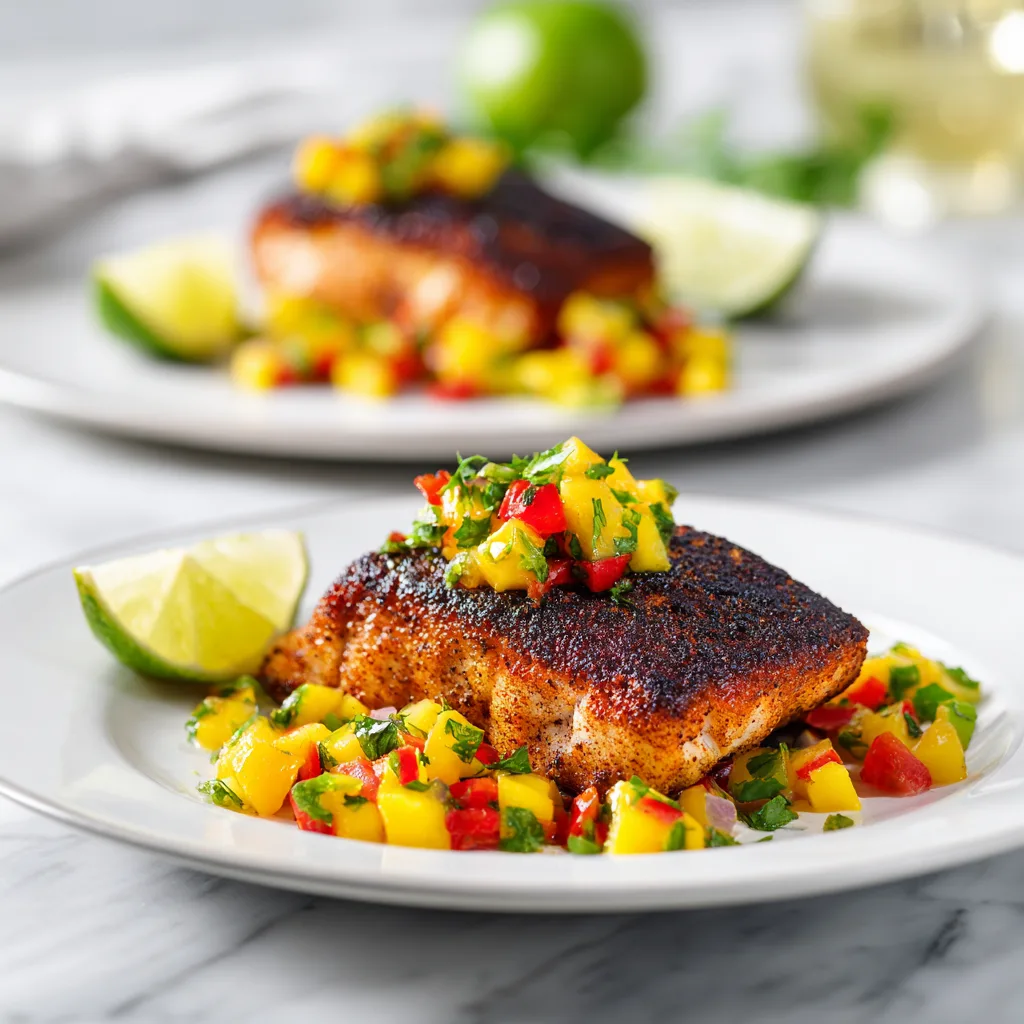
For entertaining, serve family-style on a large platter with the mango salsa arranged over the fish for a stunning presentation.
Storage & Reheating
Refrigeration
Store leftover fish and salsa separately in airtight containers.
Fish will remain fresh for up to 3 days.
Mango salsa is best consumed within 2 days.
Freezing
Freeze cooked mahi mahi for up to 2 months.
Do not freeze the mango salsa, as the texture will become watery after thawing.
Reheating
Warm the fish gently in a skillet over low heat or in a 300°F oven for approximately 8–10 minutes.
Avoid microwaving when possible to preserve texture.
Always add fresh salsa after reheating.
Common Mistakes to Avoid
Overcrowding the Pan
Too many fillets lower the skillet temperature and prevent proper blackening.
Using Wet Fish
Excess moisture causes steaming instead of searing.
Choosing Unripe Mangoes
Underripe fruit lacks the sweetness necessary to balance the spices.
Skipping the Rest Time
Even a brief rest improves moisture retention.
Overcooking the Fish
Mahi mahi can become dry if left on the heat too long.
Underseasoning
Blackened fish depends on bold seasoning, so don’t be shy with the spice blend.
Cultural Context or Fun Facts
Mahi mahi is widely enjoyed throughout tropical and subtropical regions around the world. Despite its Hawaiian name meaning “strong strong,” the fish is also known as dolphinfish in many fishing communities.
The blackening technique became famous through Louisiana cuisine, where chefs developed methods of coating seafood and meats with spice blends before cooking them in extremely hot cast-iron pans. The result is a deeply flavorful crust that enhances rather than masks the natural flavor of the fish.
Combining blackened seafood with tropical fruit salsas is a more modern coastal culinary trend that merges Caribbean, Gulf Coast, and Pacific Island influences. The pairing works because sweet fruit naturally balances smoky spices and mild heat.
FAQs
What does mahi mahi taste like?
Mahi mahi has a mild, slightly sweet flavor with a firm texture. It is less “fishy” than many other seafood varieties.
Can I use frozen mahi mahi?
Yes. Fully thaw the fillets and pat them dry before seasoning and cooking.
Is blackened fish spicy?
It has moderate heat, but you can easily reduce or increase the cayenne pepper according to your preference.
What other fish can I substitute?
Halibut, cod, grouper, snapper, and swordfish work well with the same seasoning and salsa.
Can I make the salsa ahead of time?
Yes. The salsa can be prepared up to 8 hours ahead and refrigerated until serving.
Is this recipe healthy?
Absolutely. It’s high in lean protein, packed with vitamins, and uses fresh fruit and vegetables while remaining relatively low in calories.
The beauty of this Blackened Mahi Mahi with Fresh Mango Salsa lies in its balance. The fish delivers smoky, savory depth while the salsa provides sweet, juicy brightness that instantly evokes summer. It’s a recipe that looks impressive enough for guests yet remains simple enough for a busy weeknight. Once you experience the contrast of flaky blackened fish and refreshing mango salsa, it’s likely to become a permanent part of your warm-weather dinner rotation.
Blackened Mahi Mahi with Fresh Mango Salsa
Flaky blackened mahi mahi topped with a vibrant fresh mango salsa for a quick and healthy tropical-inspired dinner.
Ingredients
Equipment
Method
- Combine all mango salsa ingredients in a bowl and refrigerate.
- Mix the blackening spices together in a small bowl.
- Pat fish dry, brush with olive oil, and coat with seasoning.
- Heat a cast iron skillet over medium-high heat.
- Cook fish 4–5 minutes per side until flaky and cooked through.
- Rest fish for 2 minutes.
- Top with mango salsa and serve immediately.
Notes
Use ripe mangoes and a thoroughly heated skillet for the best flavor and texture.