
The Best Fluffy Pancakes recipe you will fall in love with. Full of tips and tricks to help you make the best pancakes.
If you’re searching for a refreshing, vibrant, and incredibly simple dish that delivers bold flavors with minimal effort, the Greek Salad is your ultimate go-to. Known for its crisp textures, tangy dressing, and wholesome ingredients, this Mediterranean classic has become a global favorite for good reason. Whether served as a side dish, a light lunch, or part of a larger feast, Greek salad stands out as a healthy, satisfying, and visually stunning option.
In this comprehensive guide, you’ll learn everything you need to know about crafting the perfect Greek salad—from authentic ingredients and preparation techniques to expert tips, variations, and serving ideas.
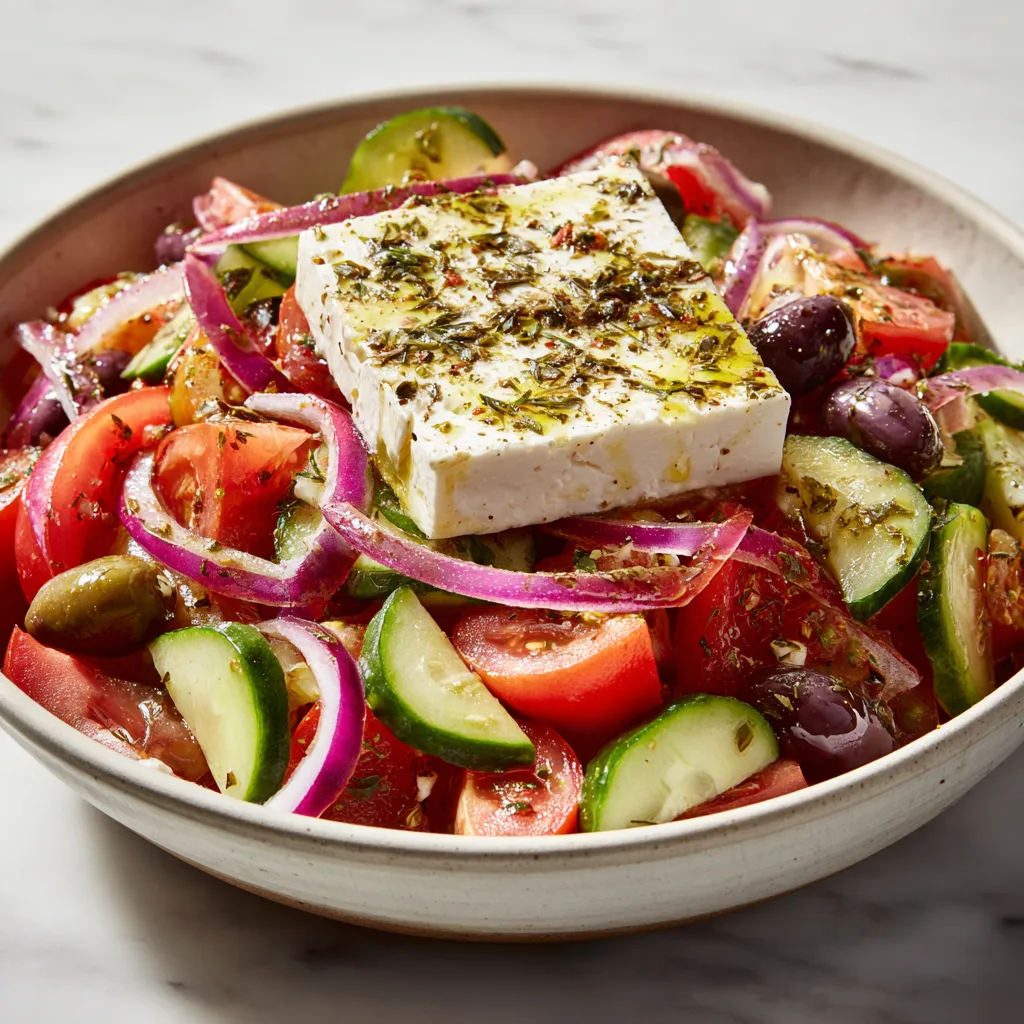
What Is Greek Salad?
Greek Salad, traditionally known as Horiatiki, is a staple dish from Greece that celebrates simplicity and freshness. Unlike many Western salads, it typically does not include lettuce. Instead, it focuses on a combination of juicy tomatoes, crunchy cucumbers, sharp red onions, briny olives, and creamy feta cheese—all brought together with high-quality olive oil and herbs.
The beauty of this dish lies in its balance: sweet, salty, tangy, and savory flavors harmonize perfectly in every bite.
Why You’ll Love This Greek Salad Recipe
- Quick and easy – Ready in under 15 minutes
- Healthy and nutritious – Packed with vitamins and antioxidants
- No cooking required – Perfect for hot days
- Versatile – Works as a side or main dish
- Authentic flavors – True Mediterranean taste
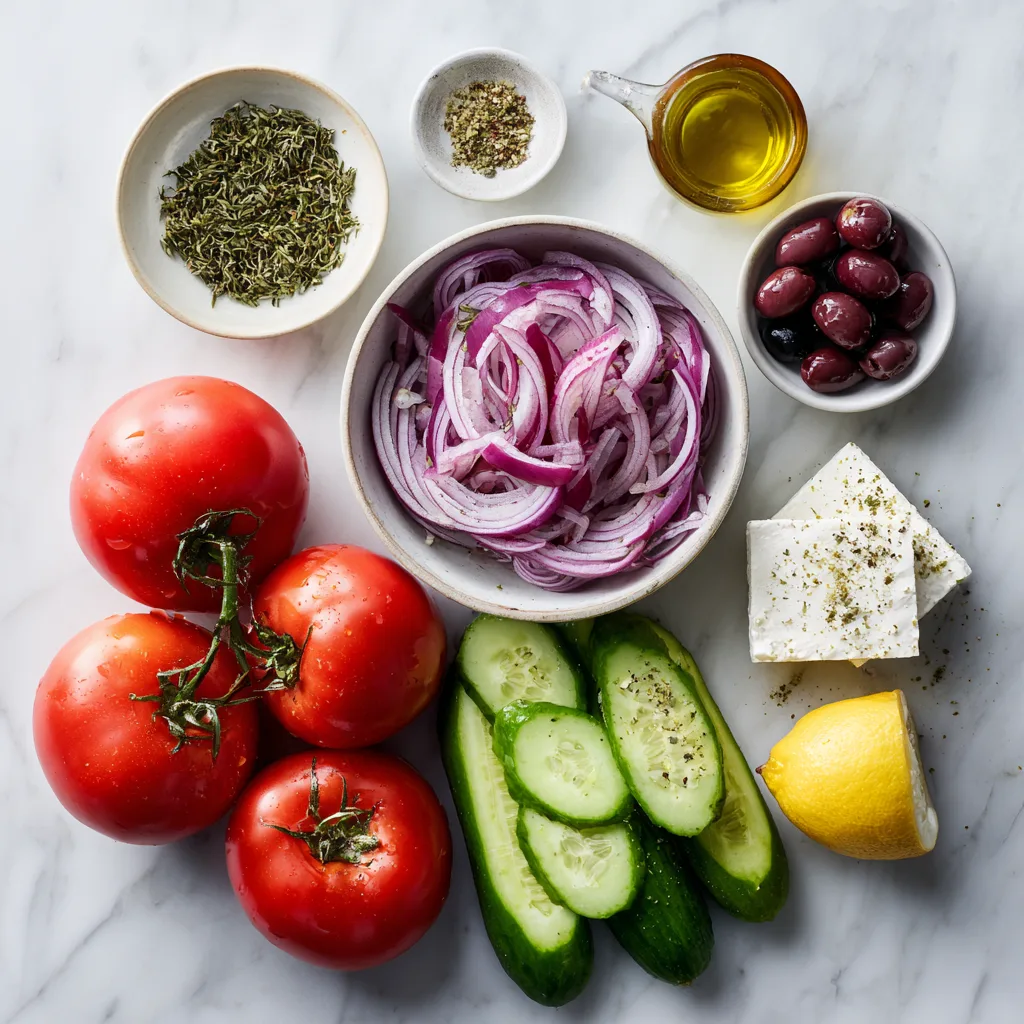
Ingredients
- 4 large ripe tomatoes, cut into wedges
- 1 large cucumber, sliced (or cubed)
- 1 small red onion, thinly sliced
- 1 cup Kalamata olives
- 200g feta cheese (block or crumbled)
- 3 tablespoons extra virgin olive oil
- 1 tablespoon red wine vinegar or lemon juice
- 1 teaspoon dried oregano
- Salt and freshly ground black pepper to taste
Instructions
- Prepare the vegetables
Wash and cut the tomatoes into wedges. Slice or cube the cucumber, depending on your preference. Thinly slice the red onion. - Combine ingredients
In a large mixing bowl, add the tomatoes, cucumber, onion, and olives. - Add the dressing
Drizzle olive oil and red wine vinegar (or lemon juice) over the salad. - Season
Sprinkle dried oregano, salt, and pepper evenly over the mixture. - Toss gently
Lightly toss the ingredients to combine without breaking the vegetables. - Add feta cheese
Place a block of feta on top or crumble it over the salad. - Serve immediately
Enjoy fresh for the best flavor and texture.
Tips for the Perfect Greek Salad
1. Use high-quality olive oil
The dressing is simple, so the flavor of your olive oil matters. Opt for extra virgin for the best taste.
2. Choose ripe tomatoes
Juicy, ripe tomatoes are the heart of this salad. Avoid underripe or overly soft ones.
3. Keep it simple
Authentic Greek salad doesn’t need complicated dressings—just olive oil, vinegar, and herbs.
4. Use block feta
Traditional recipes use a slab of feta rather than pre-crumbled cheese. It offers better texture and flavor.
5. Slice onions thinly
Thin slices reduce sharpness and blend better with other ingredients.
Variations of Greek Salad
While the classic recipe is perfect as-is, here are some creative twists:
1. Greek Chicken Salad
Add grilled chicken breast for a protein-packed meal.
2. Greek Pasta Salad
Mix in cooked pasta for a heartier dish.
3. Vegan Greek Salad
Replace feta with plant-based cheese or omit it entirely.
4. Watermelon Greek Salad
Add cubes of watermelon for a sweet and refreshing twist.
5. Quinoa Greek Salad
Incorporate cooked quinoa for extra fiber and protein.
Health Benefits of Greek Salad
Greek salad isn’t just delicious—it’s also incredibly good for you:
- Rich in antioxidants from tomatoes and olive oil
- Heart-healthy fats from olives and olive oil
- Hydrating thanks to cucumbers
- Low in carbs and suitable for many diets
- High in calcium from feta cheese
This makes it an ideal choice for anyone following a Mediterranean diet or looking to eat clean.
Serving Suggestions
Greek salad pairs beautifully with a wide range of dishes:
- Grilled meats like chicken, lamb, or beef
- Seafood such as grilled fish or shrimp
- Warm pita bread or flatbread
- As part of a mezze platter with hummus and dips
It also works wonderfully as a standalone lunch when you want something light yet satisfying.
Storage Tips
- Best eaten fresh – Flavor and texture are optimal right after preparation
- Refrigeration – Store leftovers in an airtight container for up to 2 days
- Avoid sogginess – Keep dressing separate if preparing ahead
Fun Facts About Greek Salad
- Traditional Greek salad does not include lettuce
- It’s often served with a large block of feta on top
- The dish varies slightly by region in Greece
- It’s a staple in Mediterranean cuisine worldwide
Final Thoughts
Greek salad is the perfect example of how simple ingredients can create extraordinary flavors. With minimal preparation and maximum taste, it’s a must-have recipe in every kitchen. Whether you’re hosting a dinner, meal prepping for the week, or just craving something fresh and healthy, this classic Mediterranean salad will never disappoint.
Once you try this authentic version, you’ll understand why Greek salad continues to be one of the most popular dishes across the globe.
Greek Salad
A fresh and vibrant Mediterranean salad made with tomatoes, cucumbers, olives, feta, and olive oil.
Ingredients
Equipment
Method
- Wash and prepare all vegetables by cutting tomatoes, slicing cucumber, and thinly slicing onion.
- Combine tomatoes, cucumber, onion, and olives in a large bowl.
- Drizzle olive oil and vinegar, then season with oregano, salt, and pepper.
- Toss gently to combine and top with feta cheese before serving.
Notes
Use high-quality olive oil and ripe tomatoes for the best flavor. Serve immediately for optimal freshness.