The Best Fluffy Pancakes recipe you will fall in love with. Full of tips and tricks to help you make the best pancakes.
Few baked goods feel as luxurious as a warm, freshly baked croissant recipe straight from the oven. With its delicate golden crust, crisp outer shell, and tender honeycomb interior, the croissant has become one of the most iconic breakfast pastries in the world. While many home bakers admire these buttery layers from afar, learning how to make homemade croissants can be one of the most rewarding kitchen projects you ever attempt.
The croissant originated in Europe and eventually became a symbol of French baking. Though they look complicated, making classic croissants at home is absolutely possible when you break the process into simple steps. The secret lies in laminating the dough — folding cold butter into the dough multiple times to create those signature flaky layers.
This detailed guide will help you create bakery-quality flaky French pastry in your own kitchen, with simple ingredients and clear instructions.
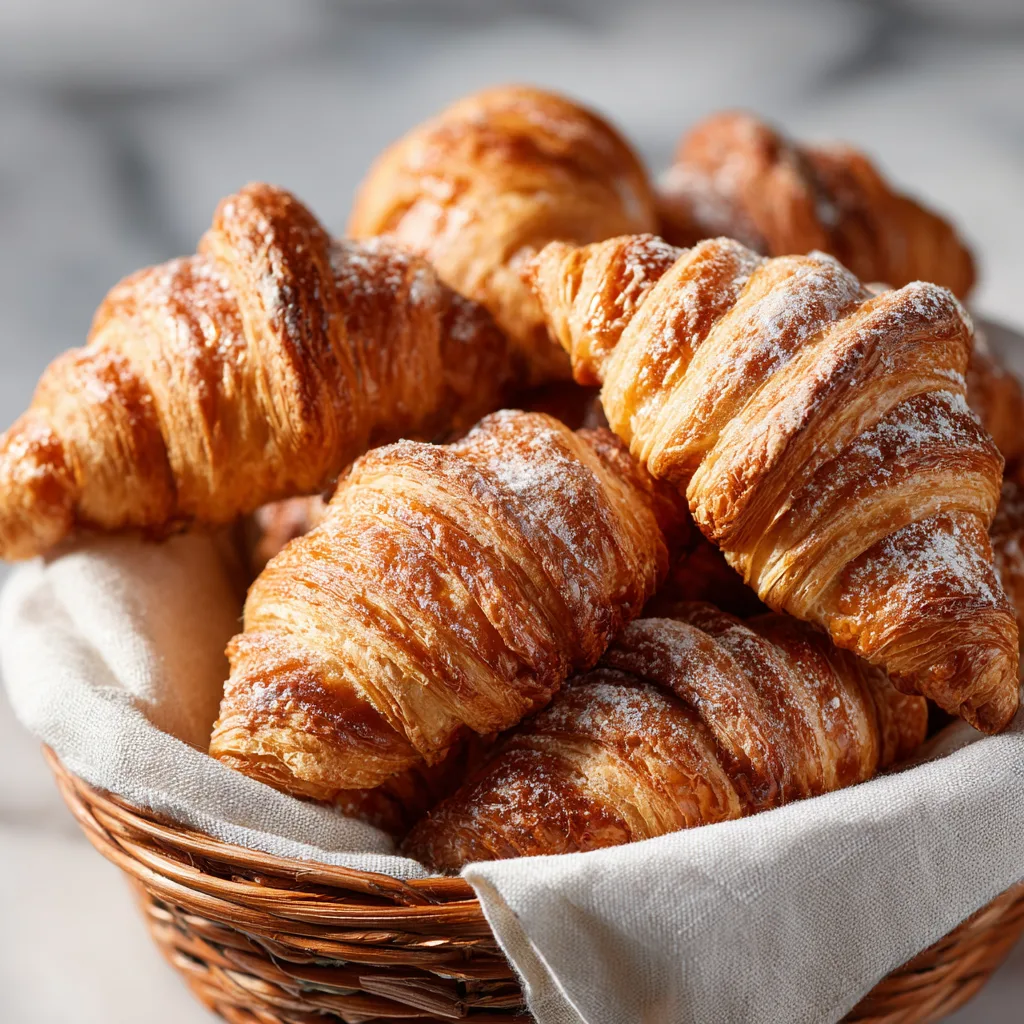
Why You’ll Love This Croissant Recipe
Homemade croissants offer something store-bought pastries simply cannot match:
- Rich buttery flavor
- Perfect flaky texture
- Freshly baked aroma
- Impressive presentation
- Customizable fillings
- Authentic French bakery experience at home
The process takes time, but most of it is resting and chilling rather than active work.
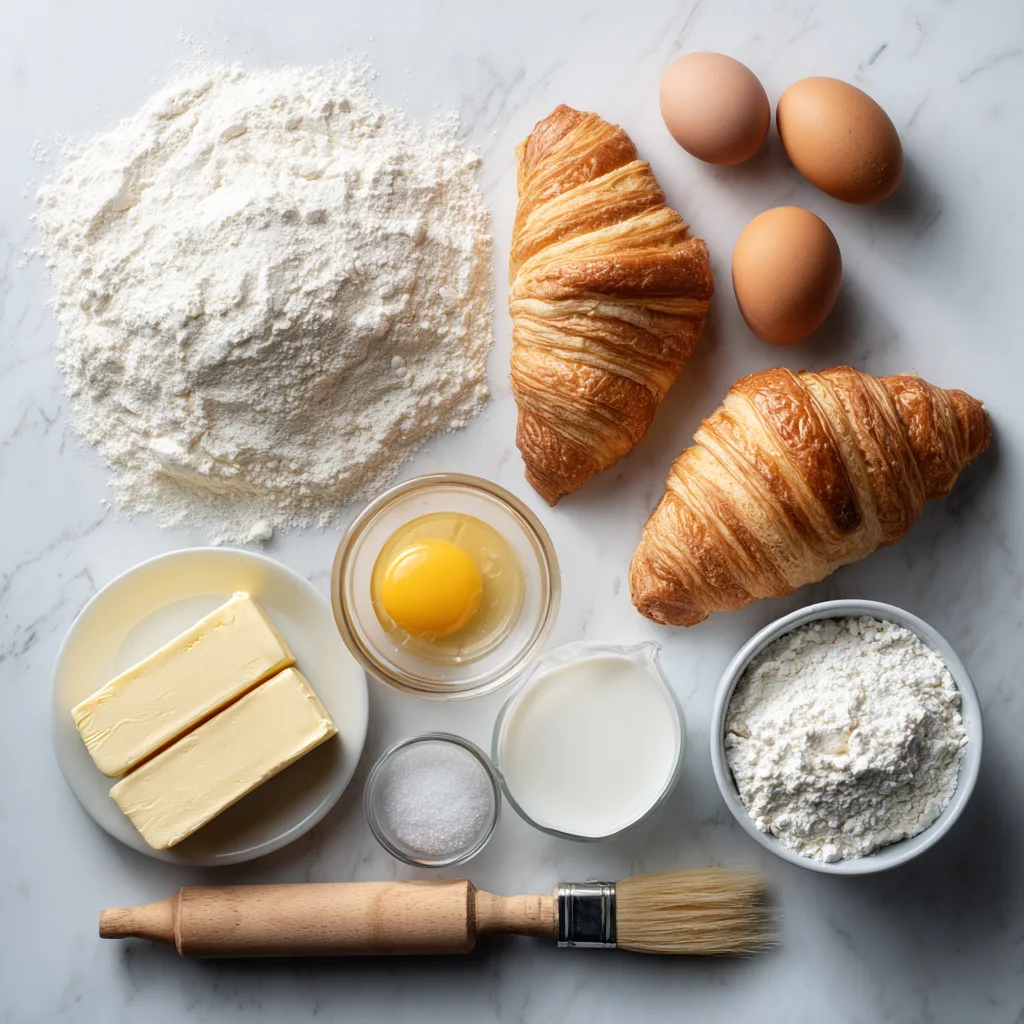
Ingredients
Dough
- 4 cups all-purpose flour
- 1/3 cup granulated sugar
- 4 teaspoons active dry yeast
- 2 teaspoons salt
- 1 1/4 cups warm whole milk
- 2 tablespoons unsalted butter, softened
Butter Layer
- 1 1/4 cups unsalted butter, cold
Egg Wash
- 1 large egg
- 1 tablespoon milk
Equipment
- Mixing bowl
- Rolling pin
- Pastry brush
- Baking sheet
- Parchment paper
- Sharp knife or pizza cutter
Instructions
1. Prepare the Dough
In a large bowl, combine the flour, sugar, yeast, and salt. Add the warm milk and softened butter. Mix until a shaggy dough forms.
Knead for 8–10 minutes until smooth and elastic.
Shape into a rectangle, wrap tightly, and refrigerate for 1 hour.
2. Prepare the Butter Block
Place the cold butter between two sheets of parchment paper.
Use a rolling pin to flatten it into an 8-inch square.
Refrigerate for 20 minutes until firm but pliable.
3. Enclose the Butter
Roll the chilled dough into a 10-inch square.
Place the butter block diagonally in the center of the dough.
Fold the corners of the dough over the butter like an envelope and seal the edges.
4. First Fold
Roll the dough into a long rectangle.
Fold the top third downward and the bottom third upward like a letter.
Wrap and chill for 30 minutes.
5. Second Fold
Rotate the dough 90 degrees.
Roll into a rectangle again.
Fold into thirds.
Refrigerate another 30 minutes.
6. Third Fold
Repeat the rolling and folding process one final time.
Chill the dough for at least 1 hour before shaping.
7. Shape the Croissants
Roll the dough into a large rectangle about 1/4 inch thick.
Cut into long triangles.
Starting at the wide end, roll each triangle toward the point.
Curve the ends slightly inward to create the traditional crescent shape.
8. Proof
Place the shaped croissants on a parchment-lined baking sheet.
Cover loosely and let rise for 1–2 hours until puffy.
9. Apply Egg Wash
Whisk together the egg and milk.
Brush each croissant lightly with the egg wash.
10. Bake
Preheat the oven to 400°F (200°C).
Bake for 18–22 minutes until deeply golden brown.
Allow to cool slightly before serving.
The Secret to Flaky Layers
The hallmark of a perfect buttery breakfast pastry is the visible layers. Here’s how to ensure success:
- Keep butter cold
- Chill between folds
- Avoid over-flouring
- Roll gently
- Do not rush proofing
These steps create steam pockets during baking, producing the signature airy interior.
Common Mistakes to Avoid
Butter Melting
Warm butter can blend into the dough instead of forming layers.
Fix: Chill immediately if the butter softens.
Dough Shrinking
If the dough resists rolling, it needs more rest.
Fix: Refrigerate for 20 minutes before continuing.
Dense Texture
Under-proofing can lead to heavy croissants.
Fix: Allow enough rising time before baking.
Flavor Variations
Croissants can easily be customized.
Chocolate Croissants
Add a piece of dark chocolate before rolling.
Almond Croissants
Fill with almond cream and top with sliced almonds.
Ham and Cheese
Add thin ham and shredded Gruyère for a savory option.
Cinnamon Sugar
Sprinkle cinnamon sugar before shaping.
Serving Suggestions
Croissants pair beautifully with:
- Fresh fruit
- Coffee
- Tea
- Jam
- Honey
- Soft cheeses
- Scrambled eggs
They are ideal for brunch tables or elegant breakfasts.
Storage Tips
Room Temperature
Store in an airtight container for 2 days.
Refrigerator
Keep for up to 5 days.
Freezer
Freeze baked croissants for 2 months.
Reheat in a 350°F oven for 5–7 minutes.

Can You Freeze Before Baking?
Yes. After shaping:
- Place croissants on a tray
- Freeze until solid
- Transfer to freezer bag
- Thaw overnight
- Proof before baking
This allows fresh croissants anytime.
Cultural History of Croissants
Though associated with France, the croissant traces back to Austrian pastries. The modern buttery laminated version became popular in French bakeries during the 19th century.
Today, the croissant remains one of the world’s most beloved breakfast pastries.
Why Homemade Croissants Are Worth It
Making homemade croissants takes patience, but the payoff is enormous.
You get:
- Better flavor
- Fresher texture
- No preservatives
- Bakery-quality results
- Satisfaction of mastering a classic pastry
Once you make them once, you may never look at bakery croissants the same way again.
Croissants
Classic buttery French croissants with delicate flaky layers and a golden crisp exterior.
Ingredients
Equipment
Method
- Combine flour, sugar, yeast, salt, milk, and softened butter to form a smooth dough.
- Chill the dough while preparing the cold butter block.
- Enclose the butter inside the dough and roll out.
- Fold the dough into thirds and chill. Repeat this process three times.
- Roll out the dough and cut into triangles.
- Roll each triangle into a crescent shape.
- Proof until puffy, brush with egg wash, and bake until golden.
Notes
Keep the butter cold throughout the process to achieve perfectly flaky layers.