The Best Fluffy Pancakes recipe you will fall in love with. Full of tips and tricks to help you make the best pancakes.
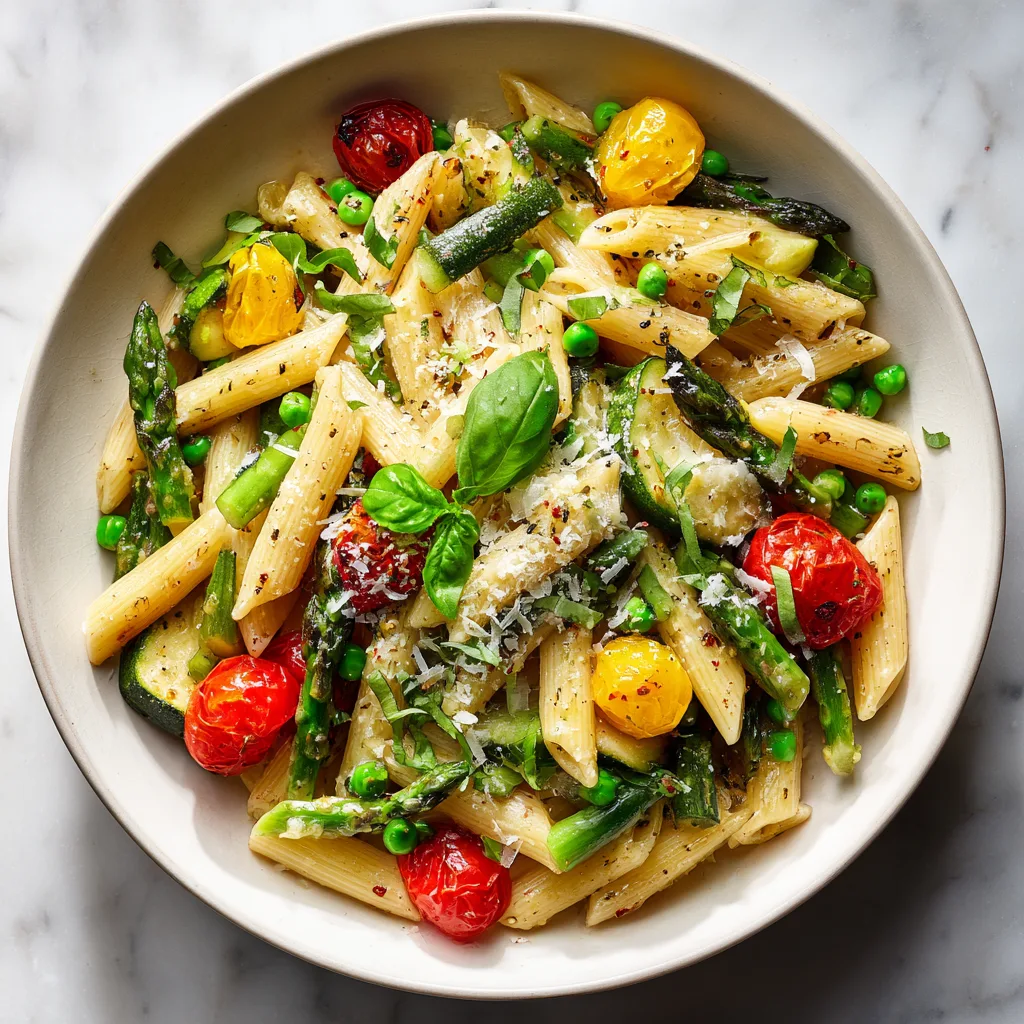
When spring arrives, kitchens everywhere start filling with bright vegetables, fresh herbs, and lighter dishes that celebrate seasonal produce. Few recipes capture the spirit of spring better than Spring Vegetable Pasta Primavera. Packed with crisp vegetables, fragrant garlic, and a delicate olive oil and parmesan sauce, this dish transforms simple ingredients into a colorful, satisfying meal.
Despite sounding like a classic Italian dish, Pasta Primavera actually gained fame in North America during the 1970s. The dish quickly became popular because it highlights fresh vegetables in a way that feels both comforting and healthy. Today, it remains one of the most beloved vegetable pasta recipes for home cooks and professional chefs alike.
What makes this Spring Vegetable Pasta Primavera special is its flexibility. The recipe can adapt to whatever vegetables are freshest at the market or in your garden. Asparagus, peas, zucchini, and cherry tomatoes bring color and texture, while a squeeze of lemon and sprinkle of parmesan elevate the entire dish.
Whether you’re cooking for a family dinner, hosting a spring brunch, or preparing a quick weeknight meal, this pasta recipe delivers bold flavors with minimal effort.
Why You’ll Love This Recipe
There are countless reasons this pasta recipe has become a seasonal favorite.
First, it’s incredibly fresh and vibrant. The vegetables stay lightly crisp, preserving their natural flavor and color.
Second, it’s quick and easy. From start to finish, the entire dish can be ready in about 30 minutes.
Third, it’s naturally balanced. With pasta for energy, vegetables for nutrients, and olive oil for richness, the dish feels satisfying without being heavy.
Finally, it’s customizable. You can easily swap vegetables, add protein, or adjust the sauce to match your taste.
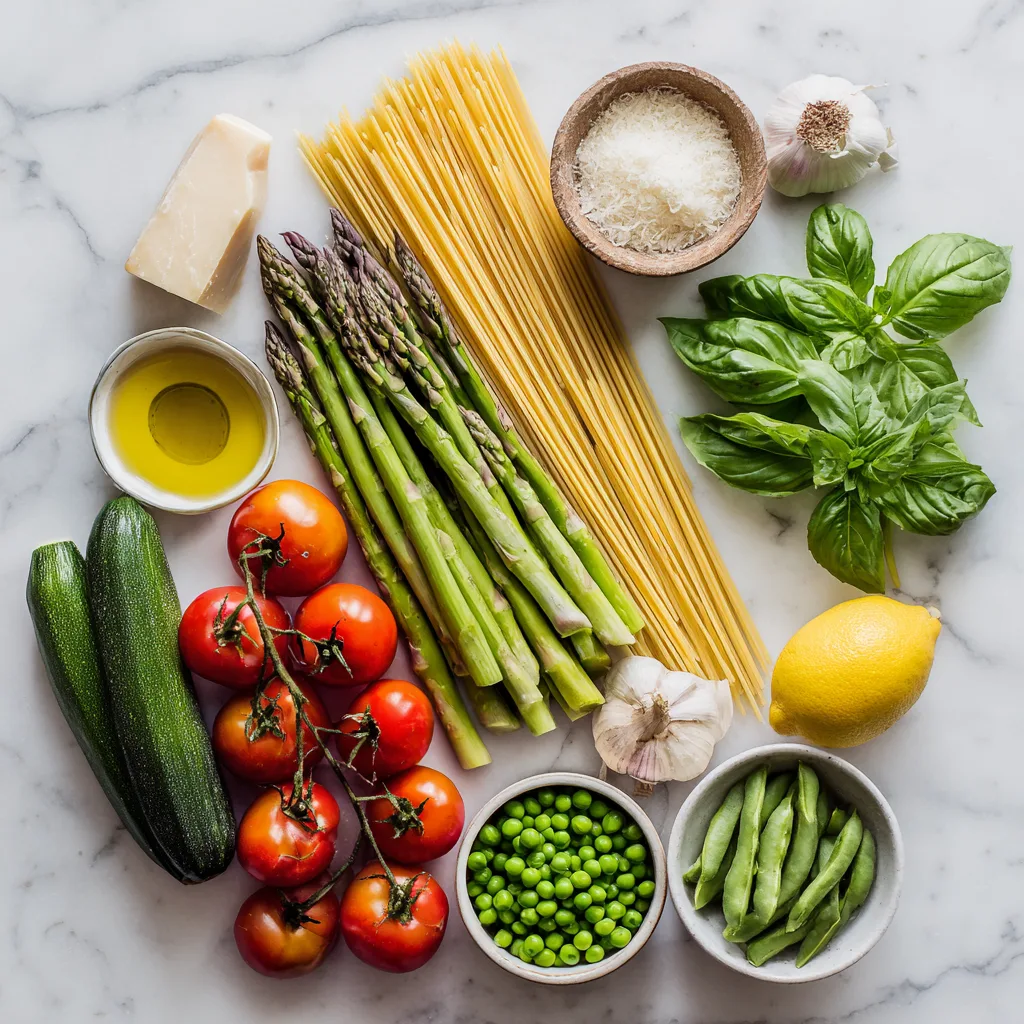
Ingredients
Main Pasta Components
- 12 oz pasta (penne, fettuccine, or spaghetti)
- 2 tablespoons olive oil
- 3 cloves garlic, minced
- 1 cup asparagus, cut into bite-size pieces
- 1 cup zucchini, sliced into half moons
- 1 cup cherry tomatoes, halved
- ¾ cup fresh or frozen peas
- ½ small red onion, thinly sliced
- ½ cup grated parmesan cheese
- 2 tablespoons butter
- ½ teaspoon salt
- ½ teaspoon black pepper
- ½ teaspoon red pepper flakes (optional)
- Zest of 1 lemon
- Juice of ½ lemon
- ¼ cup fresh basil, chopped
Optional Garnish
- Extra parmesan cheese
- Fresh basil leaves
- Cracked black pepper
- Lemon wedges
Instructions
Step 1 – Cook the Pasta
Bring a large pot of salted water to a boil. Add the pasta and cook according to package instructions until al dente.
Before draining, reserve about ½ cup of pasta water. This will help create a silky sauce later.
Drain the pasta and set aside.
Step 2 – Prepare the Vegetables
While the pasta cooks, wash and chop all vegetables.
Cut asparagus into bite-sized pieces, slice zucchini into half moons, halve the cherry tomatoes, and thinly slice the red onion.
Keeping vegetables evenly sized helps them cook quickly and evenly.
Step 3 – Sauté the Aromatics
Heat olive oil in a large skillet over medium heat.
Add the sliced red onion and cook for about 2 minutes until softened.
Add the minced garlic and sauté for 30 seconds until fragrant.
This step builds the aromatic foundation for the entire dish.
Step 4 – Cook the Spring Vegetables
Add the asparagus and zucchini to the skillet. Cook for about 3–4 minutes until slightly tender but still crisp.
Next add the peas and cherry tomatoes.
Cook another 2 minutes, allowing the tomatoes to soften slightly while still holding their shape.
Step 5 – Create the Sauce
Reduce heat to low and add butter to the skillet.
Stir gently until melted, then add:
- lemon zest
- lemon juice
- salt
- black pepper
- red pepper flakes (optional)
This creates a light but flavorful sauce that coats the vegetables beautifully.
Step 6 – Combine Pasta and Vegetables
Add the cooked pasta to the skillet with the vegetables.
Toss everything together gently, adding a splash of reserved pasta water as needed to loosen the sauce.
The starch in the pasta water helps the sauce cling to the pasta.
Step 7 – Add Cheese and Herbs
Sprinkle grated parmesan cheese over the pasta and toss again until melted.
Add the chopped basil for a burst of fresh herbal flavor.
Taste and adjust seasoning if necessary.
Step 8 – Serve Immediately
Transfer the pasta to serving bowls.
Top with extra parmesan cheese, fresh basil, cracked pepper, and a squeeze of lemon.
Serve immediately while warm.
Tips for Perfect Pasta Primavera
1. Don’t Overcook the Vegetables
The key to a great primavera is tender-crisp vegetables. They should maintain bright color and slight crunch.
2. Use Fresh Seasonal Produce
The fresher the vegetables, the better the dish. Farmers markets are perfect places to find spring vegetables like asparagus and peas.
3. Salt the Pasta Water
Well-seasoned pasta water improves the entire dish.
Many chefs say pasta water should taste “like the sea.”
4. Save the Pasta Water
The starch in the water helps create a smooth, restaurant-style sauce.
Delicious Variations
One of the reasons Pasta Primavera remains so popular is its versatility. You can easily adapt it based on ingredients you have available.
Creamy Primavera
Add ½ cup heavy cream after the butter melts to create a richer sauce.
Protein-Packed Version
Add grilled chicken, shrimp, or salmon to transform the dish into a heartier meal.
Vegan Primavera
Skip the butter and parmesan and use:
- olive oil
- nutritional yeast
Whole Grain Version
Substitute whole wheat pasta or chickpea pasta for added fiber and protein.
Best Pasta Shapes for Primavera
While almost any pasta works, certain shapes hold the vegetables and sauce better.
Top choices include:
- Penne
- Fusilli
- Farfalle
- Fettuccine
- Linguine
Short pasta shapes trap vegetables in their curves, making each bite flavorful.
Serving Suggestions
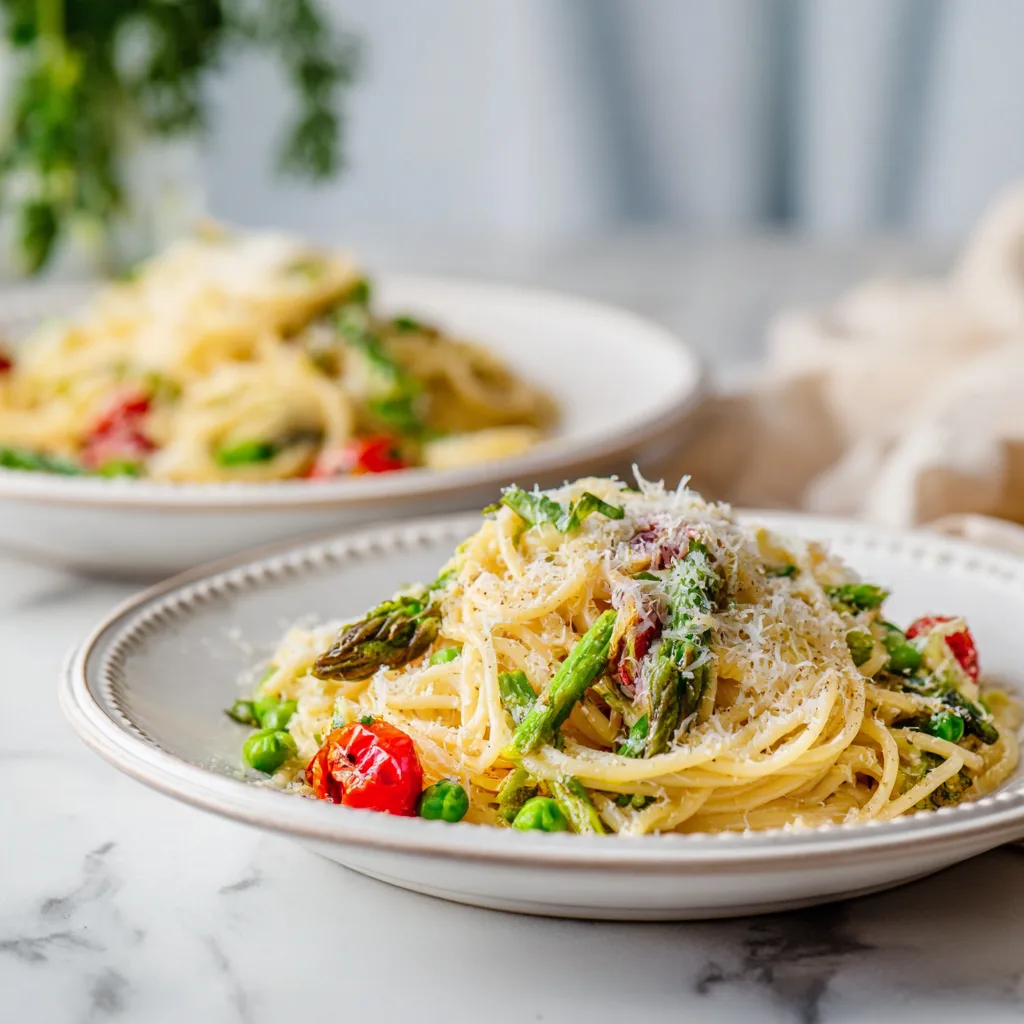
Spring Vegetable Pasta Primavera pairs beautifully with light sides that complement its fresh flavors.
Great options include:
- Garlic bread
- Lemon arugula salad
- Roasted asparagus
- White wine like Sauvignon Blanc
For a full dinner spread, start with a fresh salad and finish with a light dessert like lemon sorbet or fruit tart.
Nutritional Benefits
This dish isn’t just delicious—it’s nutritious too.
Spring vegetables provide:
- Vitamin C from tomatoes and peas
- Fiber from zucchini and asparagus
- Antioxidants from fresh herbs
Olive oil contributes healthy fats, while parmesan adds protein and calcium.
The result is a balanced meal that feels indulgent but remains wholesome.
Fun Food Fact
Despite its Italian name, Pasta Primavera became famous in New York restaurants during the 1970s. Chefs created the dish to highlight fresh seasonal vegetables, and it quickly spread across the United States.
Today, it’s considered a modern classic and a staple of spring menus everywhere.
Final Thoughts
Spring Vegetable Pasta Primavera is proof that simple ingredients can create extraordinary flavor.
With colorful vegetables, bright lemon, fragrant basil, and perfectly cooked pasta, every bite tastes like spring on a plate.
It’s quick enough for a weeknight dinner but elegant enough for entertaining guests. Even better, it adapts to whatever vegetables are in season, making it a recipe you’ll return to again and again.
So the next time you’re craving something fresh, comforting, and easy to make, grab your favorite pasta and a handful of garden vegetables.
Dinner is about to get delicious.
Spring Vegetable Pasta Primavera
A bright and fresh pasta dish loaded with spring vegetables, tossed in a light garlic lemon olive oil sauce with parmesan and basil.
Ingredients
Equipment
Method
- Bring a large pot of salted water to a boil and cook pasta until al dente according to package instructions.
- Heat olive oil in a skillet over medium heat and sauté onion for 2 minutes, then add garlic and cook until fragrant.
- Add asparagus and zucchini and cook for 3–4 minutes until slightly tender.
- Add peas and cherry tomatoes and cook for another 2 minutes.
- Stir in butter, lemon zest, lemon juice, salt, pepper, and red pepper flakes.
- Add cooked pasta and toss with vegetables, adding a splash of reserved pasta water to loosen the sauce.
- Mix in parmesan cheese and fresh basil, then serve immediately with additional parmesan.
Notes
Do not overcook vegetables; they should stay tender-crisp for the best primavera texture.